A new book for Cecilia

A NEW BOOK for children celebrates neighborhood culinary icon Cecilia Chiang — who, as the subtitle says, “revolutionized Chinese food in America.”
Her pioneering restaurant, The Mandarin, opened in 1961 in Ghirardelli Square. It “rejected the American cliches of thickly sauced stir-fries served in pseudo-exotic settings,” reported The New York Times on her 99th birthday. “She built her reputation exalting regional Chinese cuisine, often guiding diners toward the unfamiliar and the delicious.”
The children’s book, written by Julie Leung and released on April 29, tells the story of Chiang’s early privileged life in a 52-room palace in old Beijing. Her favorite room was the kitchen, even though she was not allowed inside. She fled, with one of her sisters, in 1943 as war raged in China, eventually making her way to San Francisco.
The food in Chinatown “was not what she expected at all,” says the book. “This was nothing like the food back home. What a shame that Chinese food in America was considered cheap, fast dining.” So she opened a restaurant and “served her food on quality plates and fine white tablecloths. She trained her waiters to explain the origins of each dish.”
“Suddenly, the Mandarin was the talk of San Francisco!” says the book, which was illustrated by Melissa Isai with watercolor and ink drawings capturing Chiang’s life and her food. “Rock stars and politicians alike dined at the Mandarin. She fed everyone from the Beatles to the king of Denmark. Chefs would come from all over to learn how to prepare the Mandarin’s food, and other Chinese restaurants began adopting dishes that Cecilia helped make popular.”
Among her many local fans and acolytes is Belinda Leong, co-owner of b. patisserie on California Street near Divisadero.
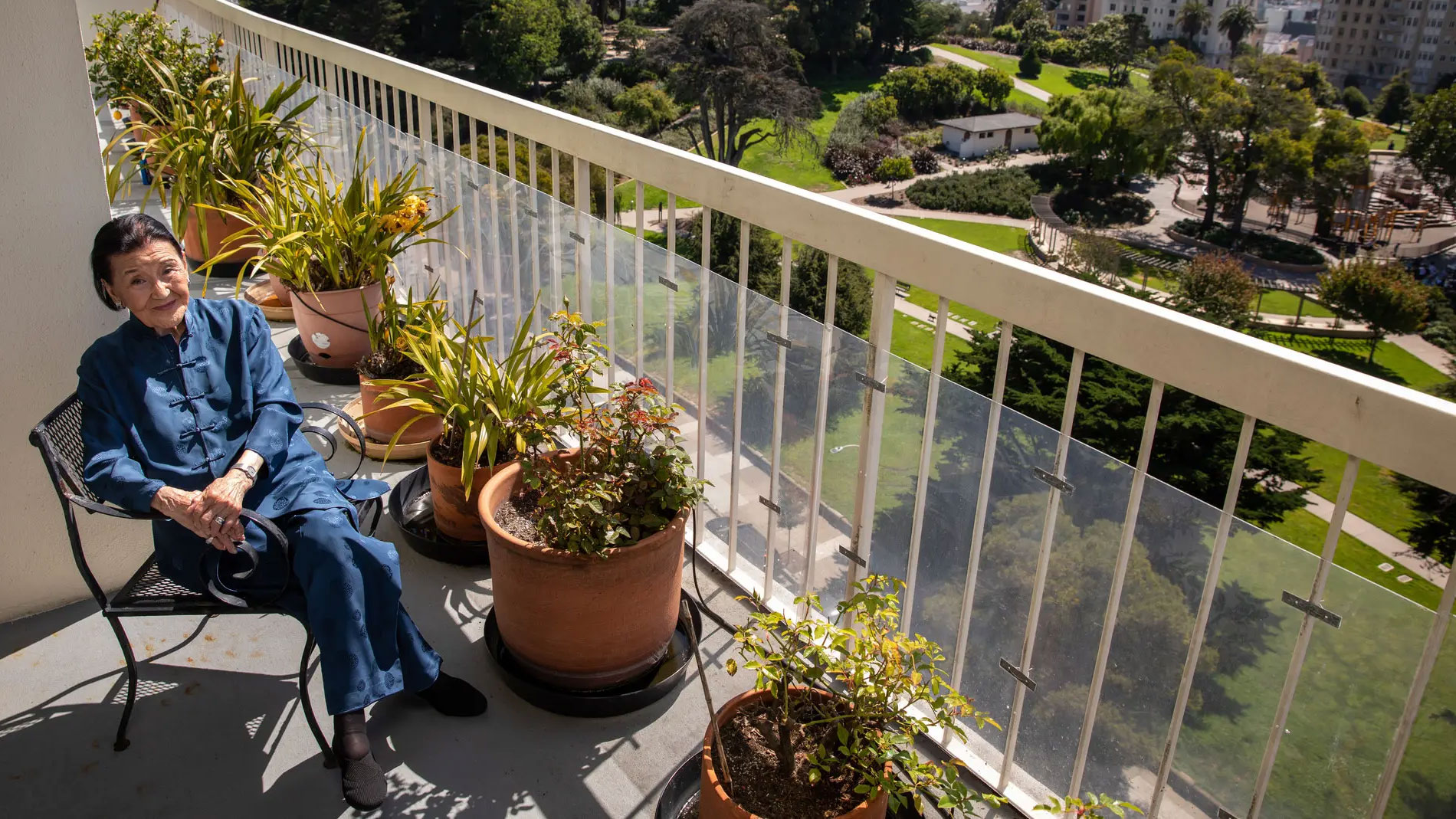
In the years before her death at 100 in 2020, Chiang lived in an apartment overlooking Lafayette Park. An elaborate dinner she cooked there for food luminaries was captured in a 2014 film about her extraordinary life, “Soul of a Banquet,” by director Wayne Wang.
Readers Respond
- Margaret H.December 28, 1969
Wonderful piece. I remember when the jazz clubs on Fillmore stayed open past two — this brought it all back. Thank you for keeping the memory of the neighborhood alive.
- David K.December 23, 1969
We've lived on Pine near Steiner for thirty-one years and it still surprises us how much this paper notices. Please keep going.
- Yuki T.December 15, 1969
A small correction — the mochi shop on Post opened in 1982, not 1985. My grandfather was there for the ribbon cutting. Love the coverage otherwise.
Editor's note · Two decades of reader comments — over 40,000 conversations — will appear here, read-only and ad-free, once the Disqus archive is connected. New commenting remains paused.