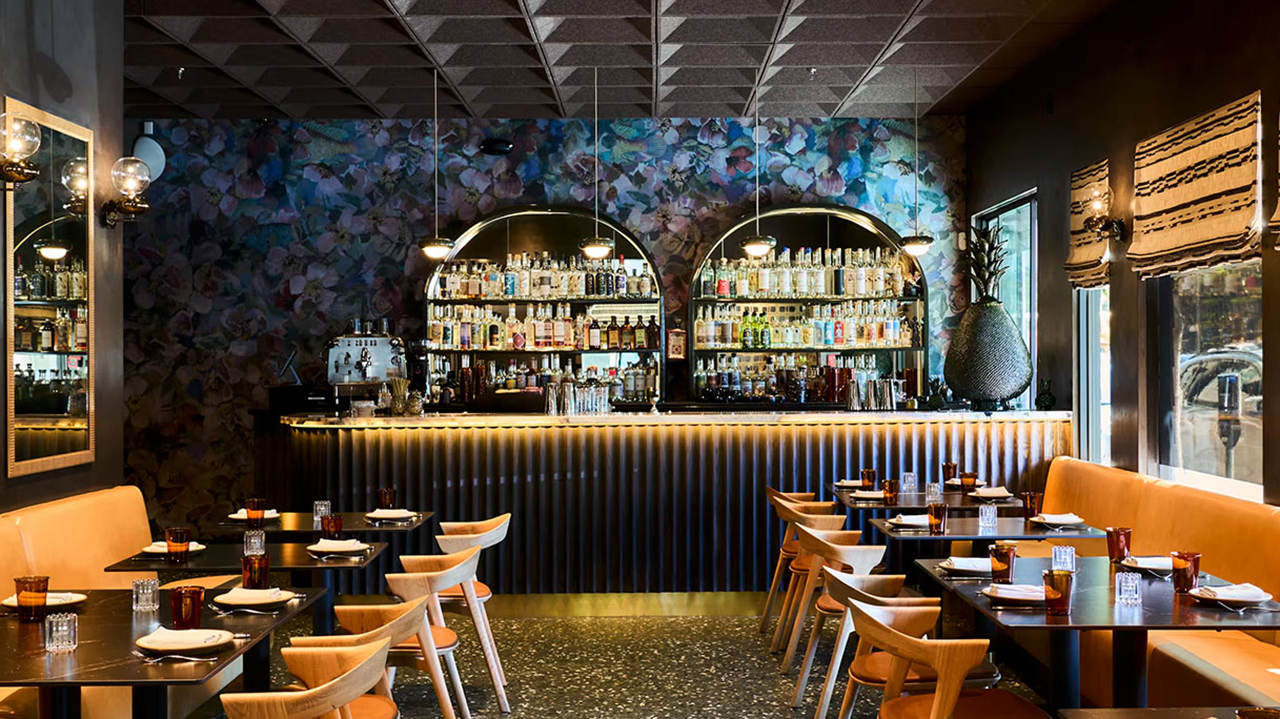
Boarding up the street

FILLMORE BEAT | CHRIS BARNETT
In 1971, carpenter Mark Johnson moved into a Victorian flat at 2254 Bush Street, just off Fillmore, and stayed for 25 years.
“It was not the most attractive place to live in the early ’70s,” he says. “But by the time I moved out, it had changed dramatically — and for the better.”
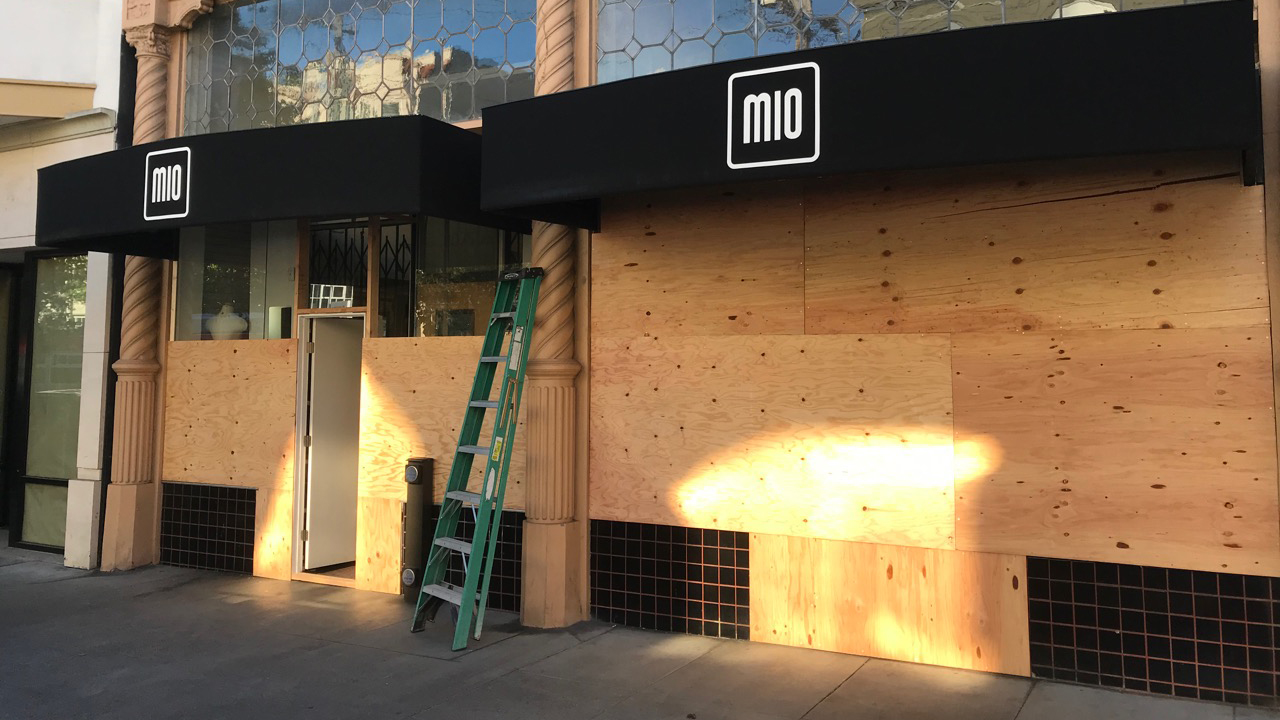
Now he’s back, plying his trade and creating a grim streetscape on a nearly deserted Fillmore Street that is creeping out the locals. Johnson, who lives in tranquil Petaluma, has quickly become the go-to guy for Fillmore merchants who want their store windows boarded up to stave off potential looters as the coronavirus crisis drags on.
For from $300 to $600, he will tailor 4×8-foot sheets of 3/8-inch plywood to cover up the mostly empty retail shops, restaurants and bars on the boulevard. Already he has protected the glass of 14 Fillmore addresses.
“Looters are opportunists who look for convenient ways to break in and get out,” says Johnson. “They won’t spend time trying to dismantle a boarded-up facade. They’ll look for glass.”
Johnson is a licensed contractor who usually remodels interiors and does finish carpentry. So, he said, he tries “to provide a very clean appearance” for his clientele “instead of just slapping up boards, nailing them to 2x4s and making it look like a blighted area.” A few businesses have painted the wood a more stylish black or white, and a couple of murals have blossomed, along with the seemingly inevitable graffiti tags. But most are sporting raw plywood.


Johnson’s boarding-up business was spurred when staffers at the HeidiSays boutique passed his name along to others in the Fillmore Merchants Association. “That’s when it really started to snowball,” he says. “I got at least a dozen jobs in two weeks.”
Passersby at first would ask: “Is this store going out of business?” He told them: “No, it’s just an abundance of caution.”
Some residents and merchants see the boarding-up as an overreaction. There have been a few break-ins, as there were before the virus hit.
“It breaks my heart to see the street like this,” says Vas Kiniris, executive director of the merchants association. But many businesses have decided to be safe rather than sorry, and Johnson is still getting calls.
His fee includes removal when the stores reopen, he says.
Readers Respond
- Margaret H.December 28, 1969
Wonderful piece. I remember when the jazz clubs on Fillmore stayed open past two — this brought it all back. Thank you for keeping the memory of the neighborhood alive.
- David K.December 23, 1969
We've lived on Pine near Steiner for thirty-one years and it still surprises us how much this paper notices. Please keep going.
- Yuki T.December 15, 1969
A small correction — the mochi shop on Post opened in 1982, not 1985. My grandfather was there for the ribbon cutting. Love the coverage otherwise.
Editor's note · Two decades of reader comments — over 40,000 conversations — will appear here, read-only and ad-free, once the Disqus archive is connected. New commenting remains paused.