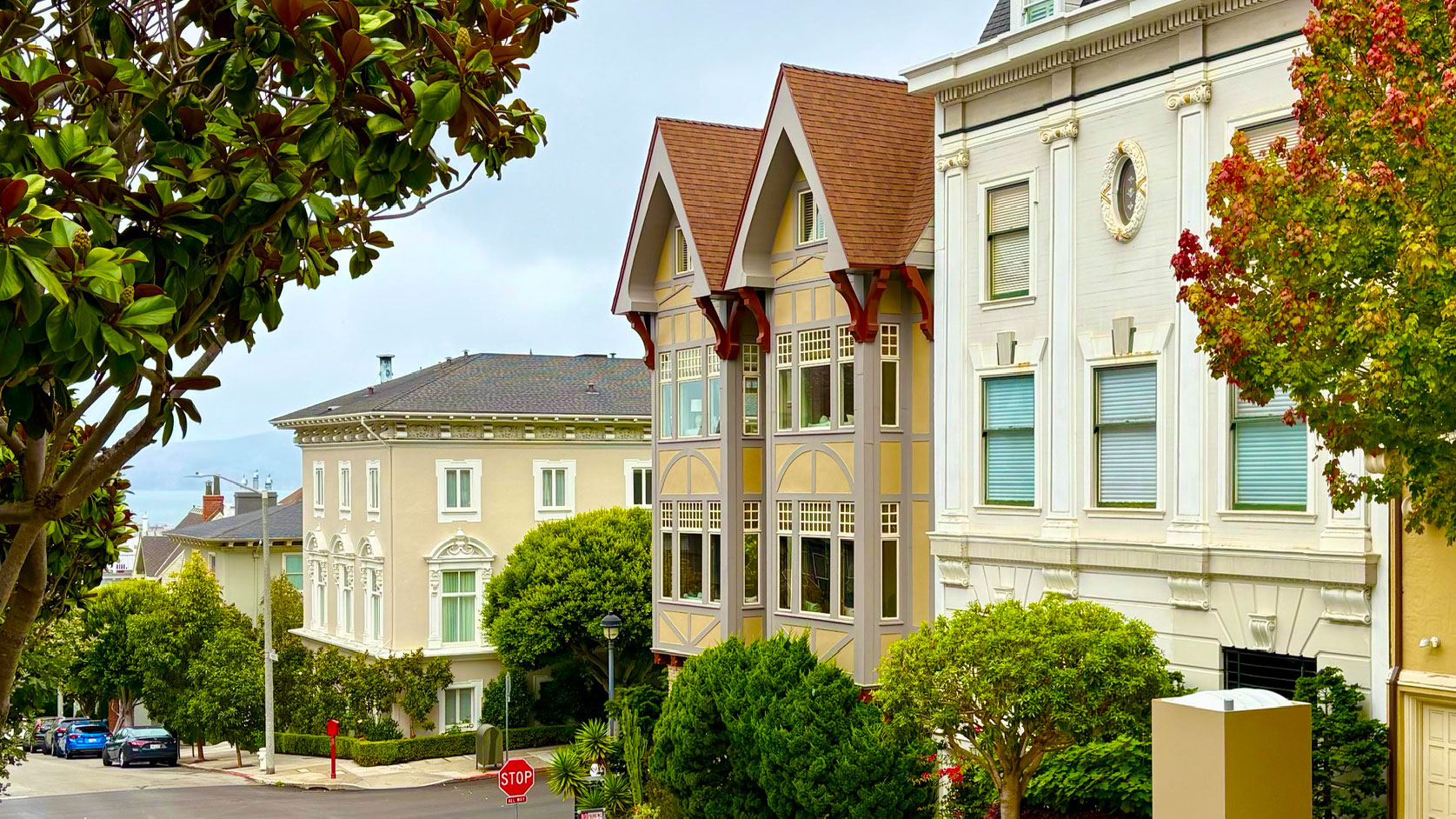
Great Old Houses: 2670 Pierce Street

The House That Graft Built
LANDMARKS | ANNE BLOOMFIELD
Back in 1906, the Board of Public Works was stalling building permits until applicants agreed to use an expensive contractor, Deneen Building Co., recommended by Mayor Eugene Schmitz. Deneen built a mansion for Schmitz at 2501 Vallejo, across the street from 2670 Pierce — the new home of, and probably designed by, none other than Jeremiah Deneen, proprietor of the firm.
One stalled permit was for a Chinese theater that Deneen jacked up to $16,000 after architects estimated only $4,000. Another was for a house of prostitution he built for three partners who’d gotten the previous building on the site condemned and demolished free by the city of San Francisco. Mayor Schmitz and political boss Abe Reuf supposedly shared in the brothel’s profits, and it received police protection. Police Commissioner W.H. Leahy owned a piece of Deneen’s firm.
All figured in San Franisco’s infamous graft prosecutions of 1906-09. Boss Reuf had engineered the election of his puppet mayor and Board of Supervisors. The whistle was blown on Reuf and friends by a dynamic quartet consisting of editor Fremont Older, former mayor James Phelan, businessman Rudolph Spreckels and prosecuting attorney Francis Heney. The graft trials were front-page news all over the country, with shady streetcar and telephone franchises far overshadowing Deneen’s relatively minor peculations.
•
Jeremiah Deneen completed 2670 Pierce peacefully enough, moving in with his wife and four children. But by spring 1907 the trials had put an end to the Deneen Building Co., and its master sold his new manse in November of that year. He continued as a relatively small-time contractor until his death in 1911.
Hailing from St. Louis, Deneen had arrived in San Francisco about 1891, a young man already calling himself a builder. His 20-year career in San Francisco included several more houses in the square block containing 2670 Pierce, and several in the 2200 block of Green — not to mention the Schmitz house, which comes on as an architectural soulmate of 2670.
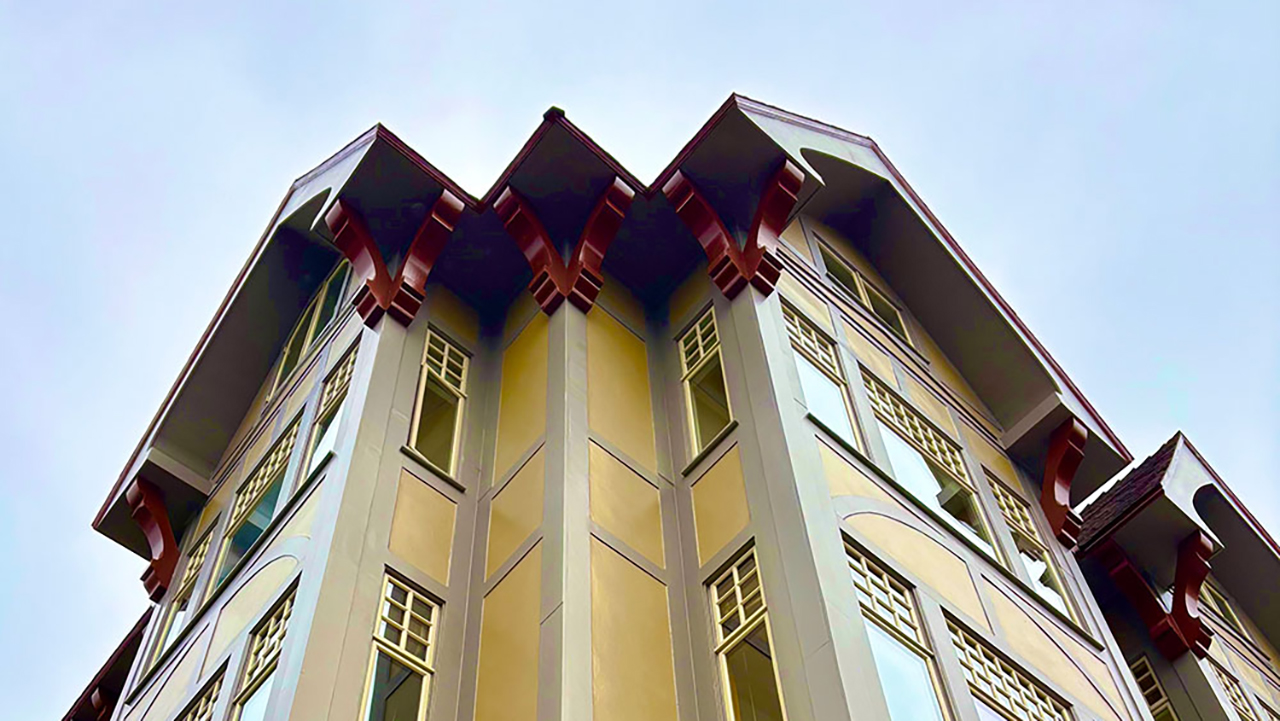
The half-timbering of 2670 allies it with one of the high styles of the early 20th century, the Arts and Crafts movement. The terms Tudor Revival and Elizabethan also come to mind in the zero setback sidewalk overhang of the bays, steep-roof dormer windows, clinker brick and half-timbering. All of these derive from early houses of England and northern Europe.
Deneen, while something of a scoundrel, was obviously no mere dog-paddler in architectural waters. His 2670 Pierce was a “modern” house in every way in 1906, with visual symbols of the hand-work ethic of William Morris and Gustav Stickley’s movement.
•
Was the next owner Packard and Cadillac dealer Cuyler Lee, the man who sold cars to Deneen’s pals, such diverse folk as a red-light liquor dealer and the superintendent of schools? Possibly so. But 2670 couldn’t shield Lee from trouble any more than the hapless Deneen. He was involved in automobile accidents, arrested for speeding, his marriage failed and he lost both car agencies.
Read all about it in a top-of-the-page story in the San Francisco Call of June 9, 1910: “As foretold in the Call, Cuyler Lee has lost the Cadillac agency, although at the time of the announcement he professed not to know that any change was contemplated.”
But back in 1907, Cuyler Lee was riding high, running the auto endurance race from San Francisco to Monterey in a tall new Packard. The Lees were a Social Register family from Michigan, car country. The 1910 census shows six of them at 2670 Pierce, along with three live-in servants, immigrants from Scotland, Denmark and Japan.
It must have been after the Lees separated that the master of 2670 was fined for being late to jury duty. He’d overslept in his digs at the Bohemian Club.
First published in the September 1995 edition.
Readers Respond
- Margaret H.December 28, 1969
Wonderful piece. I remember when the jazz clubs on Fillmore stayed open past two — this brought it all back. Thank you for keeping the memory of the neighborhood alive.
- David K.December 23, 1969
We've lived on Pine near Steiner for thirty-one years and it still surprises us how much this paper notices. Please keep going.
- Yuki T.December 15, 1969
A small correction — the mochi shop on Post opened in 1982, not 1985. My grandfather was there for the ribbon cutting. Love the coverage otherwise.
Editor's note · Two decades of reader comments — over 40,000 conversations — will appear here, read-only and ad-free, once the Disqus archive is connected. New commenting remains paused.